PDF + EPUB
12.4 MB
Lisans pèsonèl
324 paj
Machine Learning & AI
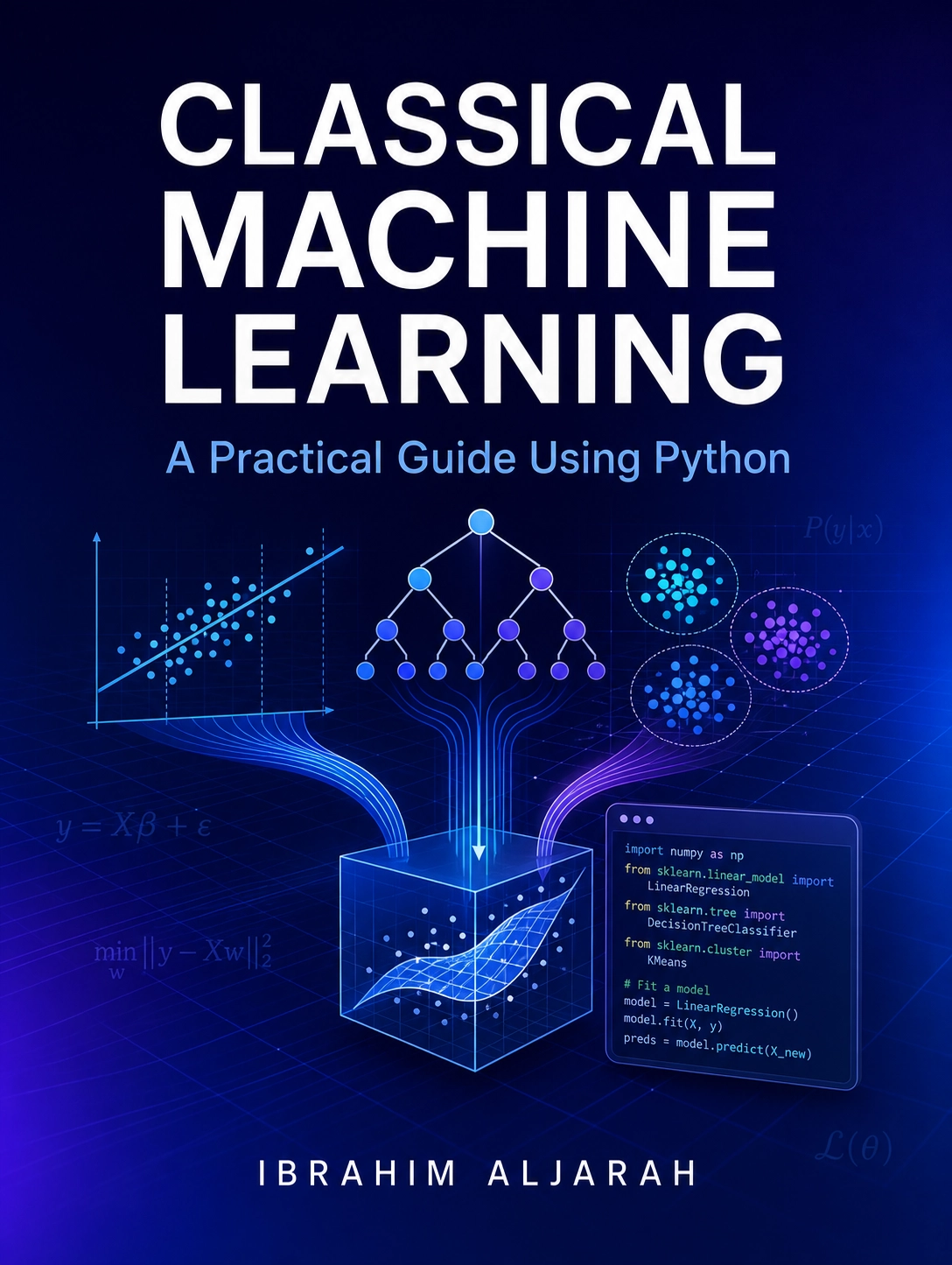
Telechajman dijitalClassical Machine Learning: A Practical Guide Using Python
Build a strong foundation in classical machine learning through clear theory, essential mathematics, and hands-on Python implementations using NumPy, pandas, scikit-learn, and TensorFlow.
Classical Machine Learning: A Practical Guide Using Python provides a clear and practical foundation in one of artificial intelligence’s most important branches.
As machine learning grows increasingly complex through deep learning and generative models, the book returns to the foundational ideas that make modern AI possible. It explains classical models intuitively and pairs the theory with hands-on Python implementations.
What the book covers
• Linear regression and logistic regression
• Decision trees and ensemble methods
• Clustering and dimensionality reduction
• Neural networks and convolutional operations
• Emerging ideas such as Cubixel representation in image processing
• Theory, mathematics, code, and practical implementations
The chapters build progressively, combining conceptual explanations with mathematical foundations and code. Practical examples use widely adopted Python libraries including NumPy, pandas, scikit-learn, and TensorFlow.
Recommended background
Readers should have working knowledge of Linear Algebra and Calculus because many algorithms rely on these mathematical foundations. A solid Python foundation is also recommended.
This book is designed for aspiring machine learning engineers, data scientists moving from another field, students, researchers, professionals, and academics who want to strengthen or refresh their classical machine learning knowledge.
Product details
Author: Ibrahim Aljarah
Publisher: Springer
Edition: 2026
Release date: August 21, 2026
Language: English
Length: 324 pages
Formats: True PDF and True EPUB
ISBN: 103032043980
USD 19.99
Wè panye a & Peman
Acha an sekiriteAksè apre yo konfime peman an · Jiska 5 telechajman
Anvan ou achte
Verifye pwodwi sa a mache ak fason ou travay.
Kondisyon ki klè
Konnen egzakteman sa acha ou gen ladan.
Lisans
Itilizasyon pèsonèl pou yon sèl achtè. Ou pa ka revann, redistribye oswa pataje fichye sous yo.
Li tout lisans lan →Ranbousman
Acha dijital yo nòmalman final apre aksè a disponib. N ap korije, ranplase oswa ranbouse yon fichye ki gen defo oswa ki pa koresponn ak deskripsyon an lè sa nesesè.
Li kondisyon ranbousman yo →Sipò
Sipò a kouvri aksè nan fichye yo ak enstalasyon ki dokimante. Travay pèsonalize ak fòmasyon sou lojisyèl pa enkli sof si sa ekri anlè a.
Mizajou gratis
Pa gen pwomès pou mizajou alavni. Ou resevwa vèsyon ki dekri sou paj sa a.
Kesyon moun poze souvan
Kesyon moun poze souvan
Who is the author?
Ibrahim Aljarah.
Who is the publisher?
Springer.
What edition is included?
The 2026 edition.
How many pages are included?
324 pages.
Which formats are included?
True PDF and True EPUB.
What prior knowledge is recommended?
Working knowledge of Linear Algebra, Calculus, and Python.
Which Python libraries are used?
NumPy, pandas, scikit-learn, and TensorFlow.
What topics are covered?
Regression, decision trees, ensemble methods, clustering, dimensionality reduction, neural networks, convolutional operations, and more.
Anndan pwodwi a
Tout sa ou bezwen.
Pa gen anyen anplis.
Build a strong foundation in classical machine learning through clear theory, essential mathematics, and hands-on Python implementations using NumPy, pandas, scikit-learn, and TensorFlow.
Ou ka renmen sa tou
Kontinye kreye.
 Telechajman dijital
PDF
Telechajman dijital
PDF
Machine Learning & AI
Python 3 and Machine Learning Using ChatGPT / GPT-4
Learn Python data analysis, machine learning classifiers, GPT-4-assisted regression, and AI-powered data visualization through practical tutorials and companion code, datasets, and figures.USD 14.99